

Saptakoteshwar Temple: A Blend of History and Spirituality in Narve
Nestled within the placid environment, the village of Narve, located in the Bicholim taluka of North Goa houses the famous Saptakoteshwar Temple. It is roughly 35 kilometers away from the state capital, Panaji. Dedicated to Lord Shiva, the temple dates back to the 12th century and was originally built on the Divar Island by the Kadambas. The site serves as the perfect place for the visitors enabling them to explore Goa’s history along with the tranquil nature.
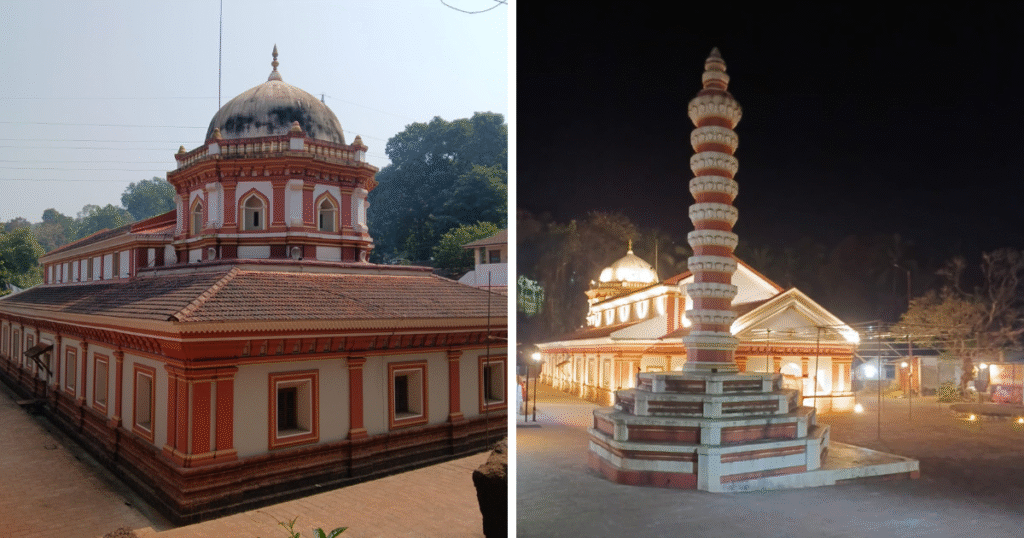
Originally built by the Kadamba dynasty, Lord Saptakoteshwar was their family deity. Coins with the inscription “With the grace of Lord Saptakoteshwar” were also minted by the Kadamba kings. In 1352, the Bahmani Sultanate conquered Goa and severely damaged the temple, digging up the sacred “Lingam.” Further in 1367, the Vijayanagar king defeated the sultanate and rebuilt the temple and restored the sacred Lingam. In 1560, the Portuguese demolished the temple during the Inquisition and erected a chapel. Local devotees managed to rescue and smuggle the Lingam out of Divar Island, hiding it temporarily before moving it across the river to Bicholim. Eventually in 1668, the Maratha warrior Chhatrapati Shivaji Maharaj reconstructed the temple at its current location in Narve to revive the Hindu culture.
The temple also serves as a perfect piece of architecture which is evident from the Garbhagriha (Sanctum) which is uniquely carved out of a solitary laterite boulder. The temple courtyard also has a tall, multi-tiered lamp tower. Other architectural highlights include the sacred tank known as the “Panchaganga Tirtha.” The Government of Goa restored the temple by reintroducing the traditional Kaavi art to its interior walls.
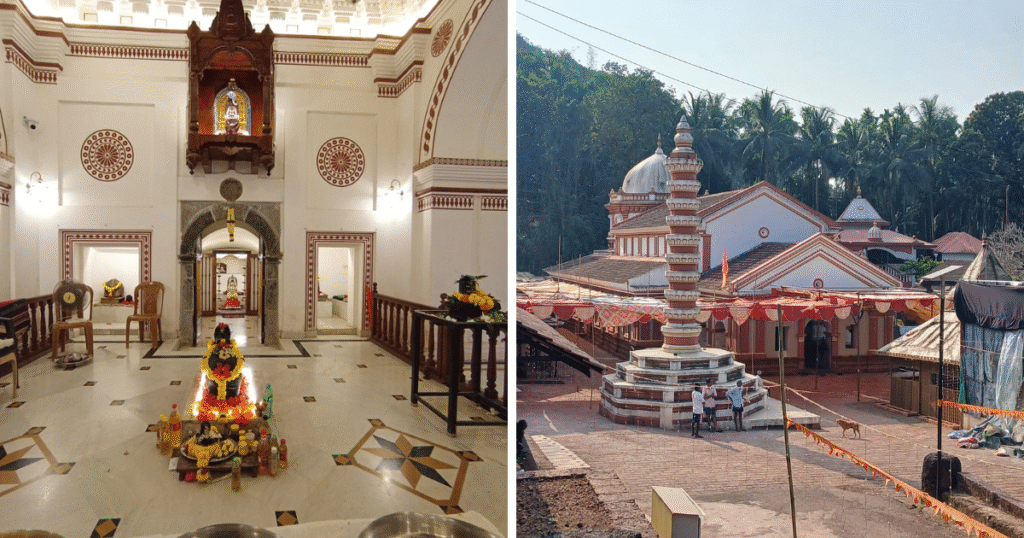
Throughout the temple there are various information boards consisting of the history, information and facts about the site, guiding and enabling the visitors to explore the temple and know the history respectively. A short walk away from the temple leads to the Narve caves containing Lingas dating back to the Chalukya era.
The deeply spiritual environment can be best experienced between October to February with dry and cool weather. On the other hand, the monsoon period between June to September makes the nature lush green making the temple look ancient.
The temple of Saptakoteshwar stands as a blend of history and spirituality attracting the visitors to explore it as well as the Narve village offering serenity with its lush greenery and sanctity.
